14 Sep 2026
Swiss Licensing Frameworks adn Their Specific Effects on Jackpot Structures in Digital Gambling Platforms
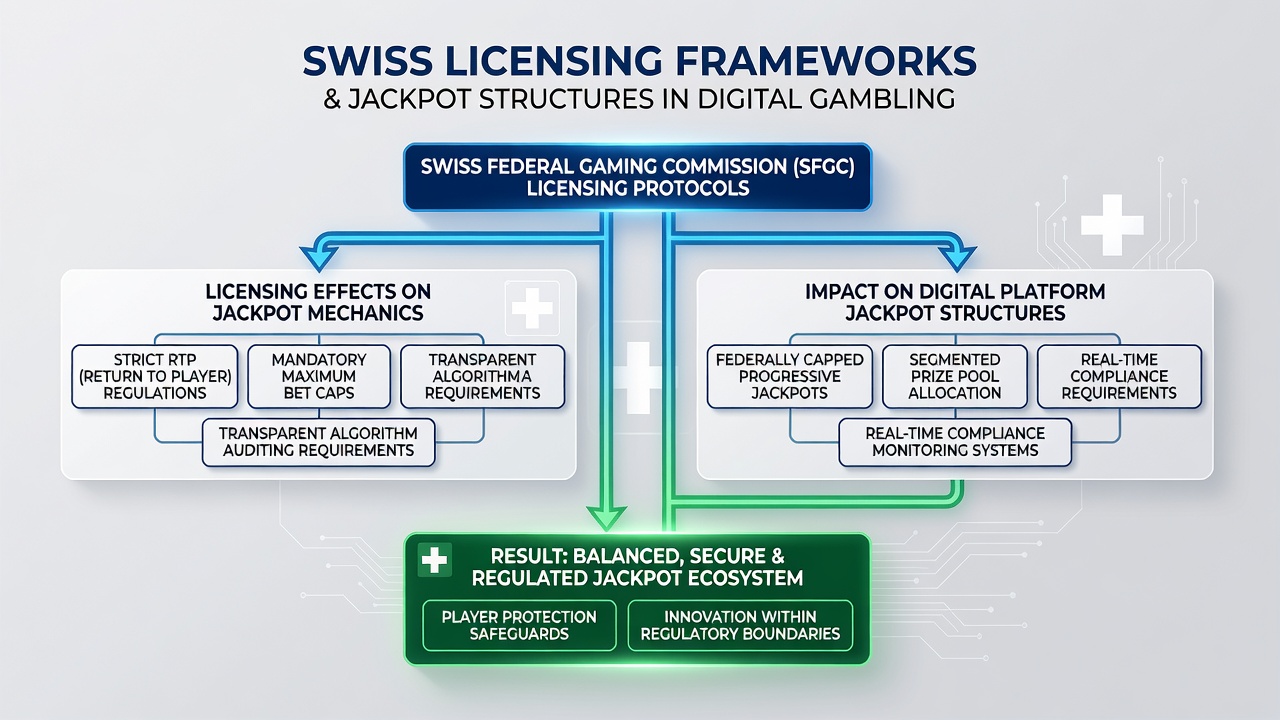
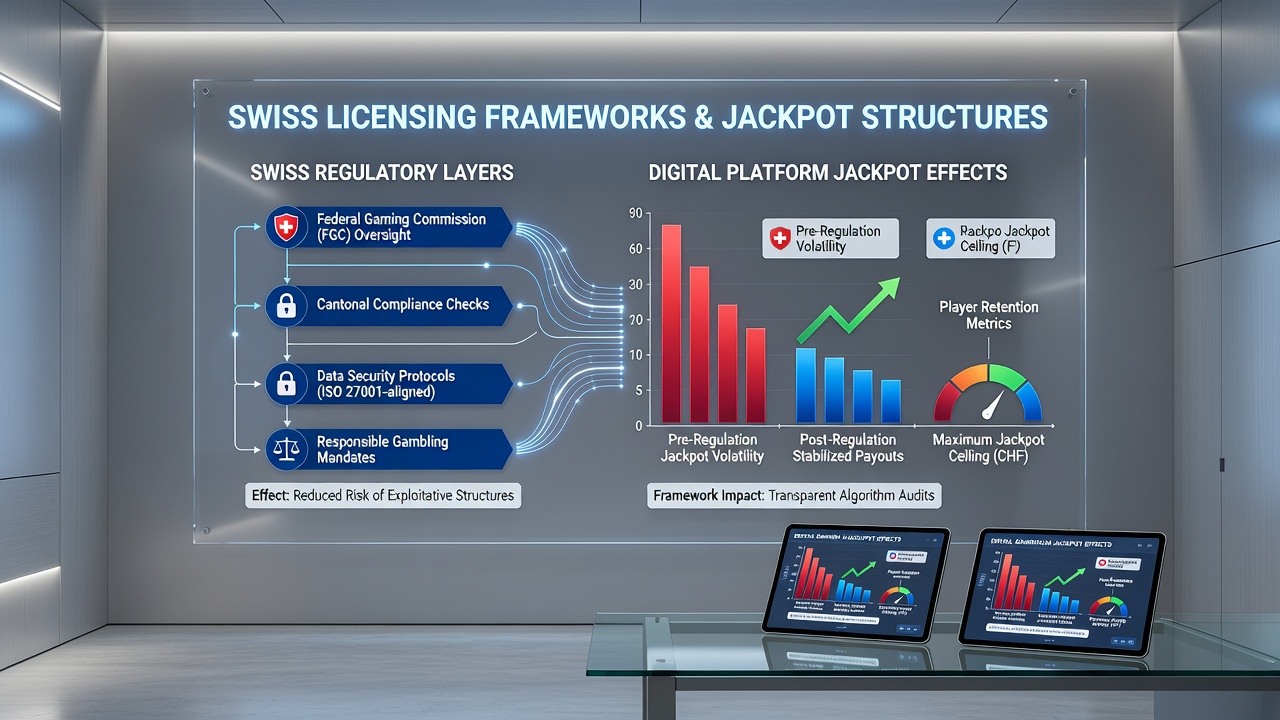 Swiss licensing frameworks set clear boundaries for digital gambling operators, and those boundaries directly influence how jackpot structures form, accumulate, and pay out on licensed platforms. The Federal Act on Games of Chance and Casinos, enacted in 2019, requires operators to secure federal authorization before offering casino-style games online, while separate cantonal approvals cover certain betting products. This dual structure creates distinct compliance layers that affect jackpot pooling, contribution rates, and prize distribution timelines. Operators holding these licenses must maintain all jackpot funds in segregated Swiss bank accounts, and they face mandatory reporting intervals that differ from those in neighboring jurisdictions. Data from the Swiss Federal Gaming Board shows that licensed platforms contribute between 15 and 22 percent of each wager to progressive pools, depending on game category, with upper limits on total pool size enforced to prevent cross-border accumulation. These caps ensure that jackpot growth remains tied to domestic player activity rather than international traffic.
Core Regulatory Mechanisms Governing Jackpot Pools
Federal license conditions require real-time monitoring of jackpot meters through approved software interfaces that connect directly to supervisory systems. Any adjustment to contribution percentages or seed values demands prior approval, and changes can take effect only after a 30-day review period. This approval process limits rapid reconfiguration of jackpot mechanics that operators might otherwise use to attract players from less regulated markets. The framework also distinguishes between local jackpots confined to a single platform and shared pools across multiple Swiss-licensed sites. Shared pools must adhere to a central clearing mechanism administered by an independent trustee, and monthly reconciliation reports must reach the Federal Gaming Board within five business days of month-end. Observers note that these reconciliation rules reduce the frequency of multi-site jackpot triggers compared with systems operating under looser European standards.Effects on Progressive and Fixed Jackpot Designs
Progressive jackpot games under Swiss licenses typically feature slower accumulation curves because contribution percentages cannot exceed the regulatory maximum, and seed amounts require justification based on historical payout data. Fixed jackpot structures, by contrast, face fewer accumulation restrictions yet still require disclosure of prize funding sources before launch. Researchers examining license applications between 2021 and 2025 found that fixed jackpots appeared more frequently in newly approved titles, while progressive variants underwent longer evaluation periods. Platforms must also implement automated payout verification that cross-checks player eligibility against Swiss residency requirements. Non-resident accounts cannot access jackpot features, which narrows the player base feeding each pool and further moderates growth rates. Figures released by the Federal Statistical Office indicate that average progressive jackpot values on licensed Swiss sites reached 4.8 million CHF in 2024, compared with higher averages recorded on platforms licensed elsewhere in Europe during the same period.